
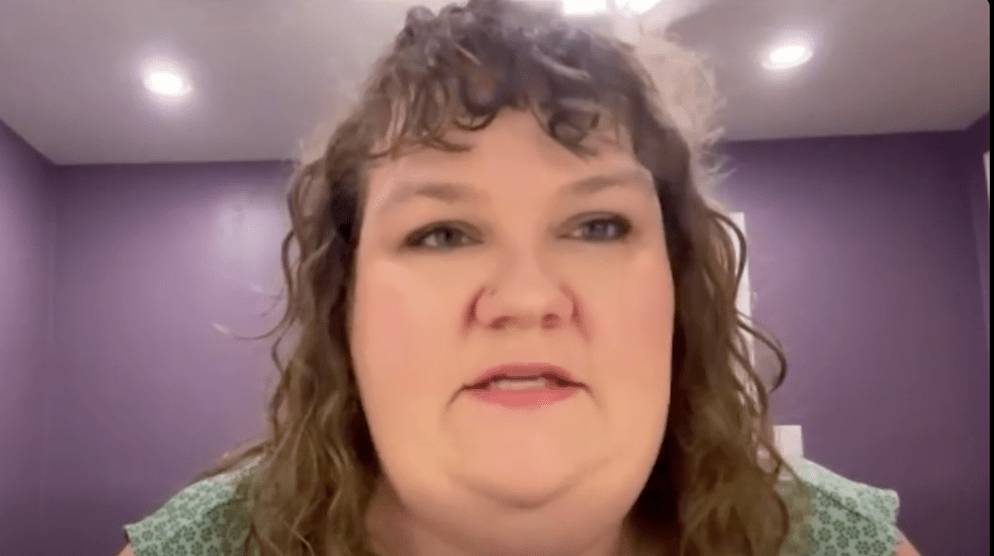
Muncie, Indiana
In the wake of his assassination, the rightwing activist Charlie Kirk was widely hailed for his commitment to free speech and open debate – for “practicing politics in exactly the right way,” as the New York Times columnist Ezra Klein put it.
Kirk’s admirers tended to bypass certain parts of his story. By and large, they overlooked his infatuation with “replacement theory,” which posits a Jewish-led plot to flood America with non-white immigrants. In their glowing portraits, there appeared to be no room as well for Kirk’s blanket dismissal of Islam as “not compatible with western civilization.” The tributes also skipped past Kirk’s seemingly reflexive denigration of high-achieving black women: in one of his talks, for example, Kirk had invoked the names of Joy Reid, Ketanji Brown Jackson and Michelle Obama in a rant against “affirmative action picks” who lacked “the brain processing power to otherwise be taken really seriously.”
What with one thing and another, Suzanne Swierc found the accolades hard to take. Swiercz worked as a mental and physical health counselor to students at Ball State University, in Muncie, Indiana. Kirk’s death, she wrote in a Facebook post, was “a tragedy,” and “I can and do feel for his wife and children.” But she went on to observe that amid an epidemic of mass shootings Kirk had described gun deaths as a “price worth paying” for the “god-given” rights of the Second Amendment. His killing, she concluded, could be viewed at least in part as “a reflection of the violence, fear and hatred he sowed.”
Swierc expressed these views in a private post, meant for the people in her Facebook circle. But someone took a screenshot and circulated her words on X, generating a wave of ugly text and voicemail messages, which left her feeling “terrified,” Swiercz said later. After one caller went as far as to cite her home address and suggest that Swiercz might deserve “the same treatment as Charlie,” she called the police, hoping for protection.
What she got was unemployment. Her university, instead of defending Swierc’s First Amendment rights, fired her, asserting that her post had significantly disrupted Ball State’s “mission and operation” and affected “her ability to perform her work.”
The law-enforcement world was similarly unsympathetic. Two days after her firing, Todd Rokita, Indiana’s Attorney General, applauded the university’s move and urged other institutions of higher education to “take notice.”
And so they did. Within weeks, the Chronicle of Higher Education had tallied up more than 40 faculty members, administrators and students fired, suspended or expelled by colleges and universities across the country. Secondary school staffers, firefighters, members of the military, and at least one Secret Service agent wound up suffering the same fate as a result of things they had said about Kirk or his death.
In a followup assessment in November, Reuters identified some 600 people who had been punished by their employers in the Kirk backlash. In Alabama, the victims included a community college instructor whose offense was a TikTok post urging followers to remember the victims of a Colorado school shooting that had taken place on the same day as Kirk’s killing. In Tennessee, another instructor was terminated for recirculating Kirk’s own statements about gun violence: that act alone, his school decided, amounted to an attempt to justify his death.
Some of these people, Swiercz included, have taken legal action. On Swiercz’s behalf, the American Civil Liberties Union of Indiana has sued Ball State’s president, Geoffrey Mearns, alleging that her termination was an unconstitutional free speech violation. The lawsuit is seeking damages and the expiungement of all records of her termination.
A New York Times reporter asked Swiercz if, in hindsight, she regretted her Facebook post. She said she didn’t. “I am trying to start talking about what is good and right and what is not,” Swiercz replied. “We’re reaching a point in the timeline of affairs in the United States where it’s time to say something.”
Posted on December 31, 2025.
 weareyourneighbors.net
Leave a comment