
Rutgers University
New Brunswick, New Jersey
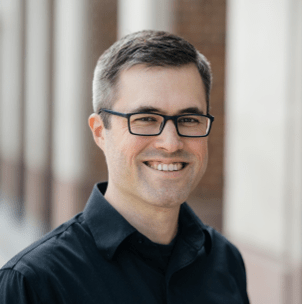
Mark Bray was trying to flee the country when a gate agent at Newark Airport told him his reservation had just been canceled by a mysterious “someone.”
Bray is a history professor at Rutgers University and the author of a 2017 book entitled Antifa: The Anti-Fascist Handbook. His troubles stemmed from a White House order, prompted by the assassination of the right-wing activist Charlie Kirk, declaring antifa a “domestic terrorist organization” and giving federal agencies broad authority to “investigate, disrupt, and dismantle any and all” of its operations.
Bray had been featured on a “Professor Watchlist” compiled by Kirk’s Turning Point USA organization. In the wake of President Trump’s order, a prominent right-wing influencer denounced Bray as a “domestic terrorist professor” in a post on X. Then the Rutgers chapter of Turning Point USA launched an online petition describing him as an antifa member and demanding that the university fire him. Next came the death threats. One of them, according to The Washington Post, called for Bray to be killed “in front of his students.” When his home address showed up in an X post, along with information about his family, Bray decided he had to do something. Something drastic.
The accusations against him made no sense, Bray insisted in an interview with Amy Goodman of the independent news show, Democracy Now! To begin with, he pointed out, antifa is not an organization at all; it’s just a shortened way of saying anti-fascist – a point of view or a movement, like feminism. “I am completely opposed to fascism…” Bray told the political website, The Hill, “but I myself have never been part of an antifa group… nor do I intend to ever be.”
He had decided to donate half his book proceeds to an antifa legal defense fund, Bray noted in an interview with NPR’s Michele Martin. But that didn’t mean he was “endorsing or involved in all the different things that people are doing” in the name of anti-fascism, he added.
Free speech advocates were quick to pounce on the White House order. It was “idiotic” to treat an idea as an organization, said Patrick Eddington, senior fellow on homeland security and civil liberties at the libertarian Cato Institute.
Idiotic or not, though, the situation had put Bray and his family in danger, he concluded, and he had to take that seriously. Bray and his wife made up their minds to leave the country for the time being. As they made their preparations, they ordered their two small children to stay indoors and they kept the living room curtains drawn.
On October 8, they had passed through security, checked their bags, received their boarding passes, and were about to board a flight to Spain when they were told their reservations had disappeared from the system. It remains a mystery who cancelled the reservation. United Airlines and the White House both declined a request from WIRED to comment, while a spokesperson for the Department of Homeland Security, Tricia McLaughlin, told the magazine, “We… are trying to get ground truth but are not tracking anything like this from TSA [Transportation Security Administration] or CBP [Customs and Border Protection].”
Hoping for the best, Bray rebooked their flight for the following day. This time, federal agents at the airport searched and questioned him while his wife and his children wept, he told Goodman, at the sight of “very bad men” taking him away for what ended up being about an hour of interrogation. A short while later, however, Bray posted on Bluesky that “Our plane to Spain is in the air!” He told Goodman he is spooked about the prospect of returning to the U.S. next year, but hopes the political climate will have improved by then.
In October, the Rutgers University Senate, comprised of faculty, students, staff, administrators, and alumni, passed a resolution affirming its support for Bray’s free speech rights and for “the principles of free inquiry that undergird the University’s mission.” With the university’s backing, Bray is teaching his classes online from Spain.
“I’m hopeful–and I say this as a history professor–that someday we will look back on this as a cautionary tale about authoritarianism,” Bray told The Washington Post.
Posted on November 21, 2025
 weareyourneighbors.net
Leave a comment