
Hackberry, Louisiana
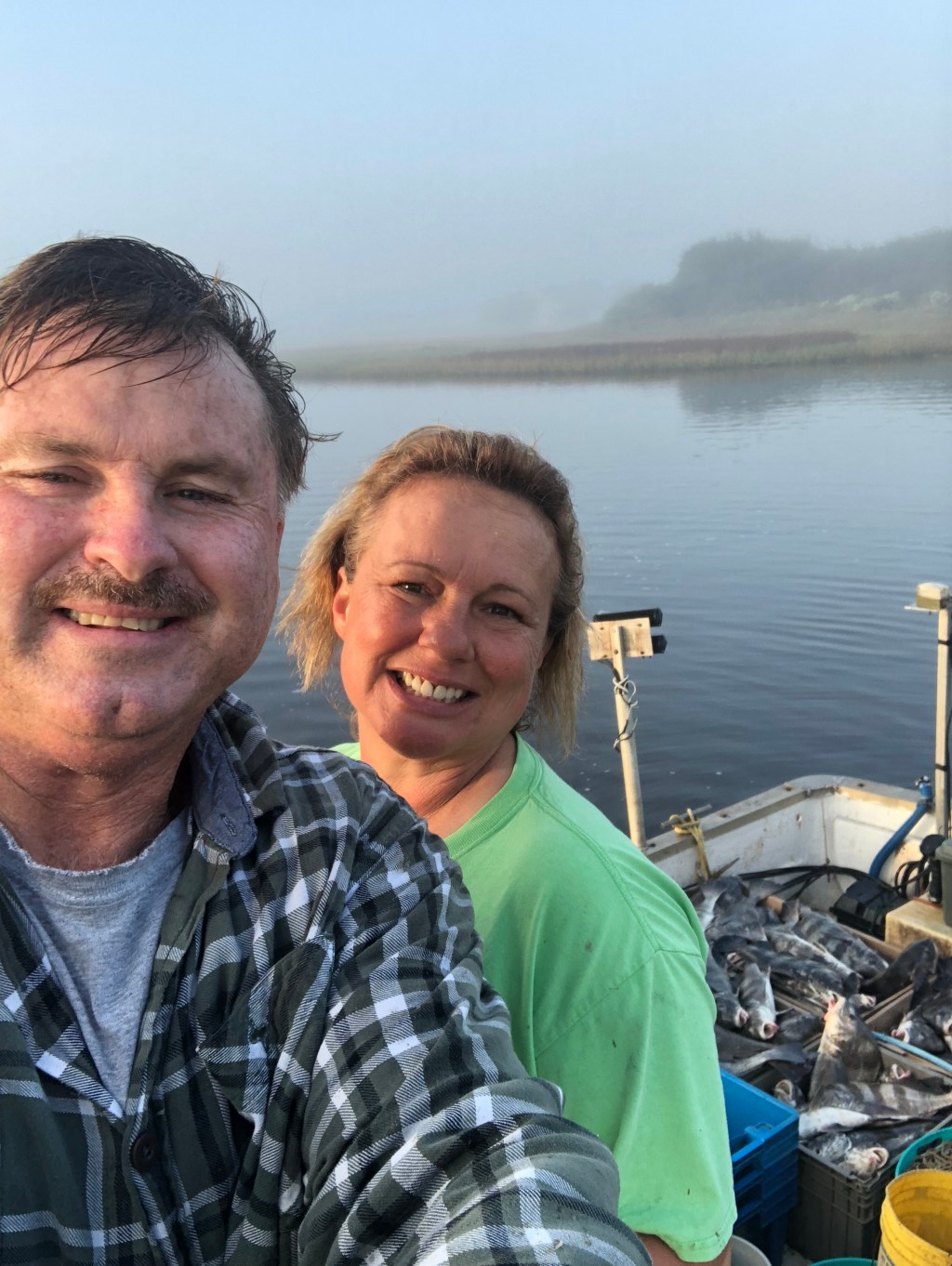
Eddie Lejuine, 62, has been fishing and shrimping for a living since he finished high school. That enterprise gotten a lot harder lately, and he has a pretty clear idea about why: LNG, or Liquefied Natural Gas.
Just when the United States was running out of easily accessed oil and coal, the fossil fuel industry came up with a high-profit way to extract methane gas from deep rock formations and turn it into a frigid liquid for delivery to energy consumers around the world. The LNG companies promoted their end product as a cleaner-burning alternative to oil and coal. But they skipped over the massive harm that methane causes before it gets burned. To begin with, there’s the gas that escapes in its extraction, liquefaction, and transport: the leakage from the vessels carrying LNG across the Atlantic is enough by itself to wipe out methane’s supposed environmental advantages. All told, according to one recent study, LNG accounts for at least 24% more greenhouse gas and particulate emissions than coal.
The other big missing piece in the industry’s story was the damage done to waterways by the release of chemicals used in LNG processing, and by the dredging and churning that accompanies the construction of offshore terminals and the coming and going of LNG tanker ships, which can be as long as two football fields. Even some of the measures taken to counter these ill effects – weirs, levees, and culverts – cause problems by making it difficult for marine life to move between salt-water channels and adjacent lakes and marshes. In Cameron Parish, where Eddie Lejuine lives, the amount of habitable marsh is “probably a third of what it used to be, if that,” he says.
When he started out, Cameron Parish was “ranked one of the top seafood producers in the United States,” Lejuine recalled in a recent radio interview with Between the Lines, a weekly radio newsmagazine. Back then, he went after oysters, crabs and shrimp: “I was a gill netter, a strike netter, and I fished offshore some,” Lejuine told reporter Melinda Tuhus. Later he used lines and hooks to catch drum, a brackish-water fish so named because it makes a deep, drum-like sound. “With everything combined, I made a good living,” Lejuine said. “I raised five kids and a bunch of grandkids… and money wasn’t an issue most of the time.”
The trouble, to hear him tell it, dates back about ten years, to the opening of the first in a series of giant LNG terminals along his stretch of the Gulf Coast. Ever since, the LNG business has been growing and the fishing business has been shrinking. These days, the remaining shrimpers have to go out to sea, and Lejuine and his wife Michelle – his partner in business as in life – are just about the only locals still fishing for drum. But they’re putting in longer hours for smaller catches. “We’re sending twice the equipment out,” he says, “fishing twice as hard, and making about a sixth or eight of the money.”
In August of 2025, the Lejuines joined a delegation of Gulf Coasters on a lobbying trip to Washington, DC. They went there hoping to prevent a company named Global Ventures from building the biggest LNG terminal ever. His group got into the offices of a number of elected officials, including that of Louisiana Senator John Kennedy. But Lejuine came away from those conversations feeling pessimistic about their prospects. Global Ventures, he pointed out in the radio interview, with his wife at his side, had made a $51 million contribution to Louisiana State University, and “it seems that means more than the health of our coastal families and our fisheries,” he said.
Lejuine had also developed deep doubts about the Trump administration’s ability to hear their story. In one of his first acts as President, Donald Trump revoked a Biden administration order pausing the approval of any new LNG terminals until the environmental consequences could be fully assessed. Since that time, Trump appointees have not just been greenlighting projects; they’ve been pressuring foreign countries and U.S. states and utilities to choose LNG over solar and wind energy – even when the renewable options are cheaper as well as healthier.
“I was all for Trump,” Lejuine said. “I thought the economy would flourish more. I thought that prices would go down on our fuel and groceries and building materials. But now…”
“He’s drill baby drill,” Michelle Lejuine interjected.
“Yeah, he’s opened up everything, evidently,” Eddie Lejuine agreed.
Donald Trump did not exactly hide his intentions on the campaign trail last year. In May of 2024, he invited a group of oil industry executives to Mar-a-Lago, and, as the Washington Post reported later, told them: “You all are wealthy enough that you should raise $1 billion to return me to the White House.” It would be a “deal” for them, he added, implying that they would get their money’s worth in lower taxes and fewer regulations.
Lejuine had missed that story. “I don’t watch the news much,” he says. “I just work.”
Posted on November 8, 2025
 weareyourneighbors.net
Leave a comment