
San Diego, California
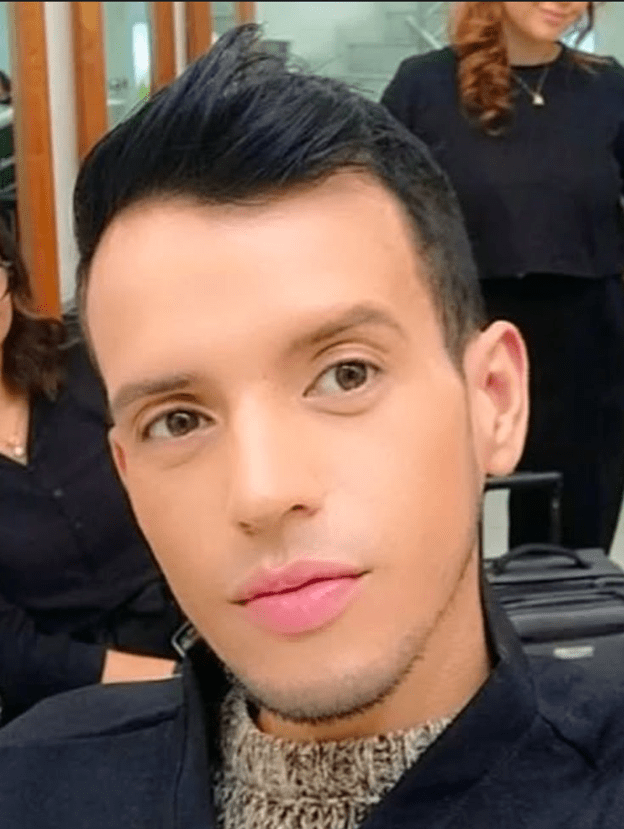
A pair of misunderstood tattoos sent Andry Hernández Romero into the most dreaded prison of one of the Western Hemisphere’s most brutal dictatorships. The tattoos – crowns above the words Mama and Papa – were tributes to his parents, Hernández told ICE agents. But the agents had taken them for marks of allegiance to Venezuela’s Tren de Aragua gang, and they weren’t interested in hearing otherwise, according to Romero.
He was an improbable gangster – a gay makeup artist, hair stylist, and amateur dress designer from the Venezuelan Andes. Fleeing anti-LGBT prejudice in his home country, Hernández had trekked across the roadless Darien Gap between Colombia and Panama and made his way to Mexico, where he submitted an application for asylum in the U.S. last summer.
With his paperwork in hand, Hernández headed north, and after presenting himself at a legal border crossing, was duly imprisoned in San Diego to await a court hearing. He had a promising case, according to Lindsay Toczylowski, the immigration lawyer who agreed to represent him. But when his court date arrived, Hernández didn’t. He was “in the middle of seeking asylum” and “just disappeared,” Toczylowski told a reporter for CBS’s 60 Minutes.
Donald Trump was in the White House by then, and ICE, under pressure to jack up its numbers, had moved Hernández and more than 200 other Venezuelans to a detention facility in Texas, telling them to prepare for deportation back to Venezuela. But the plane they boarded took them to El Salvador. The Trump administration, invoking the Alien Enemies Act, a 1798 law never previously used outside of wartime, had expelled them without a hearing.
In another unprecedented move, it had sent them to a third country, arranging for them to be housed at El Salvador’s Terrorism Confinement Center, or CECOT, in return for a payment of $6 million a year to the government of President Nayib Bukele, the self-styled “world’s coolest dictator.”
CECOT is a massive prison whose inmates live in giant cells, fifty or more men to a cell, sharing two sinks and two open toilets and sleeping in four-story metal bunks without mattresses, sheets, blankets, or pillows. They leave their cells, typically, for no more than a single 30-minute exercise break per day. Hernández, like the others, had no visitors, no letters, no contact with lawyers or family, and, it seemed, no prospect of release, since the Salvadoran authorities had never let anyone out of CECOT, and its own warden had referred to it as a “cemetery for the living dead.”
After four months, however, Hernández and the Venezuelans who arrived with him were freed and returned to Venezuela in a deal with the Trump administration (which had previously claimed it no longer had any power over their fates).
Now back in his hometown, Hernández speaks of the “immense” happiness of his unexpected freedom and of the support he has received from his family and community. “I’m surrounded by people who love me, who care for me,” he said in a recent interview with Tim Miller, a podcaster and former Republican Party strategist. Questioned about reports that he had been beaten by guards and sexually abused by fellow-inmates, Hernández said the reports were generally true, but he preferred not to go into details.
He saw other prisoners beaten, too, he told Miller – beaten and sometimes shot with rubber bullets for next to no reason. Many of the Venezuelans came home, according to Hernández, with “fractured ribs, fractured fingers and toes” and marks on their chests and faces “from the projectiles.”
He summed it up as a hellish time, but also as a learning experience – a lesson in empathy, he said, and an opportunity to see the world through the eyes of people from other backgrounds.
“I’m wondering what you think about America now,” Miller asked him. Hernández said he felt no resentment towards the U.S. It’s a country of “extraordinary opportunities” with good people and bad people – like all countries, he said.
Posted on August 26, 2015
 weareyourneighbors.net