
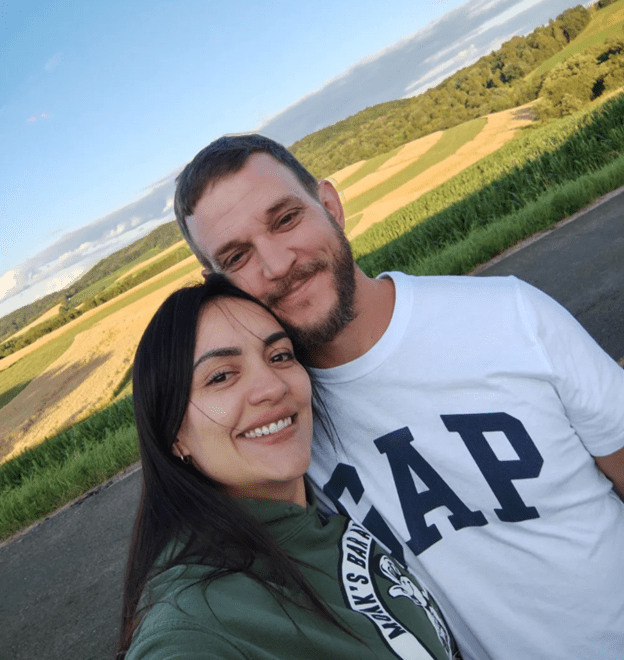
Dells, Wisconsin
Midway through college in her native Peru, Camila Muñoz got accepted into a work-study program that brought her to the U.S. and the town of Dells, Wisconsin. When the pandemic shut the border down, Muñoz overstayed her visa, finding a job at a local hotel. Then, through a friend, she met a Wisconsin man, Bradley Bartell, who asked her out and, on their first date, said he was looking for a long-term relationship. They wound up getting married two years later.
When the pandemic lifted, Muñoz and Bartell they went to Puerto Rico for a belated honeymoon, reasoning that she would have no trouble traveling since she had entered the U.S. lawfully and had filled out the paperwork to qualify her for eventual citizenship. Bartell, who had voted for Donald Trump, expected Trump’s deportation plans to focus on “criminal illegal immigrants,” as Trump had said they would. By now, however, the White House was telling a different story: “If an individual is overstaying their visa,” press secretary Karoline Leavitt explained, “they are, therefore, an illegal immigrant residing in this country, and they are subject to deportation.”
At an airport checkpoint on their return from Puerto Rico, Muñoz was taken into custody, and (as it took her husband a week to discover) sent to a privately run detention center in Louisiana. She spent the next seven weeks there, sleeping in a dormitory with 80 other women until an immigration judge ordered her release on bond. “The jail captain, she opened the door,” Muñoz told USA TODAY. “Bradley was standing there sweating. I was sweating and my heart was beating so hard. I kissed him and we hugged and he said, ‘Let’s get out of here.’”
In a more recent interview with Newsweek, Muñoz expressed conflicted feelings: pleasure at being restored to freedom and being back with her husband, alongside deeply troubling memories of her time in the detention camp. The living conditions were harsh, she recalled, and some of the other women had been separated from their children for many months. “I’m focusing on them,” Muñoz said. “I’m trying to put my attention on those women instead of just victimizing myself.”
Still at risk of being deported, Muñoz says she’s trying to be philosophical about it. Whatever happens, “I have to just accept what the government is telling me,” she told Newsweek. Like her husband, she supports the administration’s over-all efforts: “I trust in the process that he’s doing this to make the country a safer place, safe for me and for the immigrants.”
Date Posted: 8/1/25
 weareyourneighbors.net